
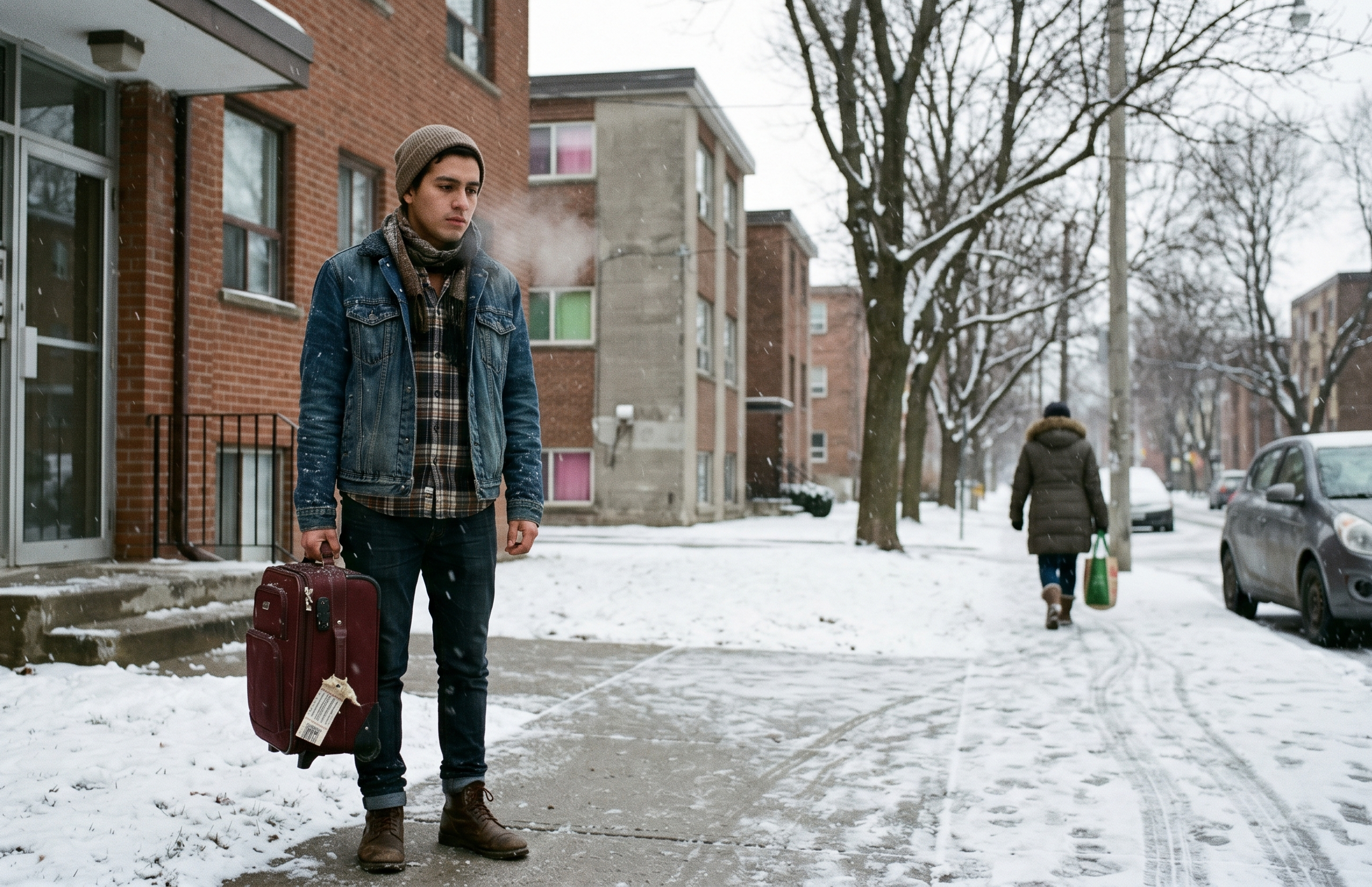
No amount of academic preparation fully prepares a student for the experience of arriving in Canada from Latin America for the first time. The weather is different. The food is different. The social rhythms are different. The way people communicate — even the way they express warmth or distance — is different in ways that are subtle but significant. This post is written from lived experience. It is not a brochure.
Finding Housing Before You Arrive
If your college offers on-campus residence, apply as early as possible — often before your study permit arrives. Many colleges open residence applications to new international admits and fill within weeks. On-campus residence costs more than a shared apartment but removes many unknowns: utilities, furniture, and a built-in social environment are typically included.
For off-campus housing, use verified platforms — your college’s off-campus housing board, student Facebook groups specific to your institution, and well-known rental platforms with review systems. Be cautious of listings that seem too affordable for the area, request deposits before you’ve seen the unit, or ask for wire transfers rather than standard payment methods. Housing scams targeting international students are unfortunately common. In Toronto, established Spanish-speaking communities exist in parts of Rexdale, Weston, and Etobicoke. In Ottawa, Vanier and parts of Orleans have diverse international communities.
The Winter: A Real Adjustment, Not a Minor Detail
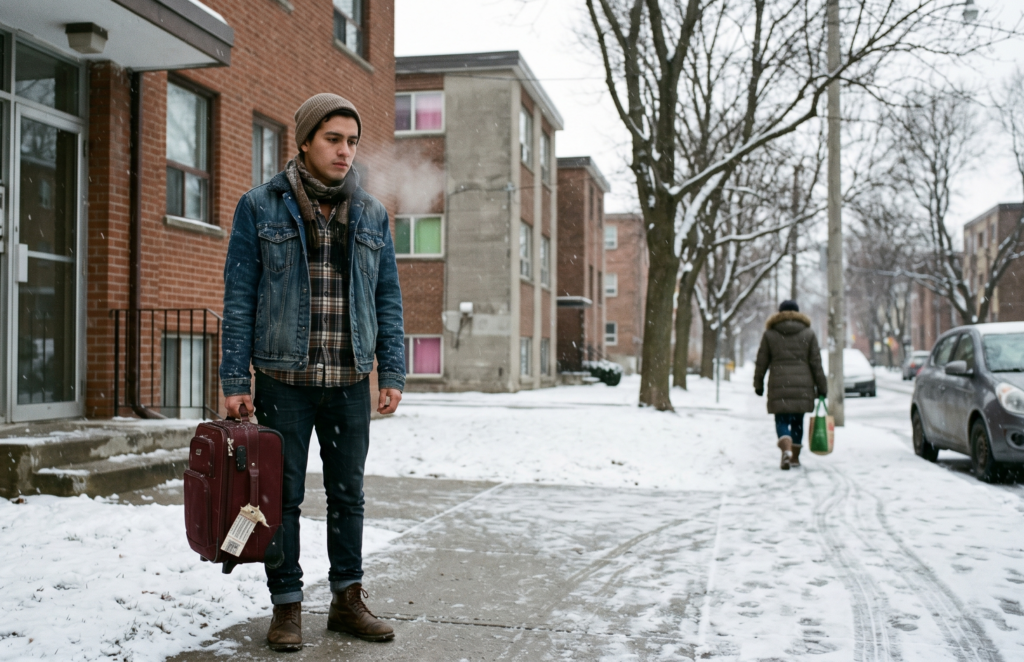
If you grew up in Bogotá, Mexico City, Lima, or Caracas, Canadian winter is a genuine shock — not just the cold, but the darkness and the way it changes the energy of daily life. Ontario winters run November through March. Temperatures reach -10°C to -20°C in January and February, with wind chill making it feel significantly colder. Ottawa winters are heavier and snowier than Toronto.
Budget $300–$600 CAD for quality winter clothing: a proper insulated coat, thermal layers, waterproof boots rated to -30°C, gloves, a hat, and a scarf. Do not underinvest in this. Ontario has strong second-hand markets (Value Village, Facebook Marketplace) where quality winter gear is available affordably. The psychological dimension of winter matters too — December has as few as 8–9 hours of daylight. Building a social routine before winter arrives makes a measurable difference.
Food, Community, and the First Few Months
Ontario’s major cities are genuinely multicultural. Toronto has dozens of Colombian, Mexican, Peruvian, and Venezuelan restaurants and grocery stores with familiar ingredients. Finding your community intentionally during the first weeks matters more than most students expect. Many Latin American students arrive expecting Canadian culture to feel more immediately familiar than it does. In practice, building genuine friendships here takes longer than at home — Canadian social culture is more private and takes time to open up.
Join your college’s international student association. Connect with Latin American student clubs if they exist at your institution. Attend orientation events and club fairs — these are specifically designed for students in this transition period, and the connections made in the first month tend to be the most durable.
Academic Culture and What to Expect in Class
Canadian academic culture has specific expectations that take adjustment. Direct participation in class discussions is expected and sometimes graded. Professors expect respectful academic challenge. Collaboration on assignments has strict integrity rules — sharing answers or copying work, even with a friend, is treated as academic dishonesty with serious consequences, including potential study permit implications. These norms are not universal, and Latin American students benefit from understanding them explicitly rather than learning through difficult experience.
Monica’s Perspective
EXPI was built by Monica Marroquin Rojas, who made this transition herself as a Mexican immigrant to Canada. In her years in Ontario admissions and international student services, Monica observed that the families who navigated this transition most successfully were the ones who planned for the emotional and logistical realities — not just the academic ones. EXPI’s guidance addresses the whole transition, not just which program to choose.