
Don't choose the wrong Ontario college program.
Most families from Latin America approach Ontario college the wrong way — browsing program names, comparing tuition, and hoping the choice feels right. This guide was written to change that. It gives students and parents a clear, practical framework for evaluating programs based on outcomes, not impressions — before committing to tuition, travel, and time.
Written by Monica Marroquín, founder of EXPI Global Education and former Ontario college admissions professional. The same frameworks Monica uses with families she advises directly — now available for free.
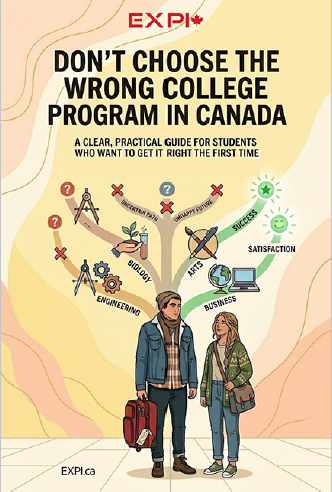
Download the 24-page clear, practical guide for students and parents who want to get it right the first time.
"The single most expensive mistake a family can make is choosing the right country and the wrong program."
I spent over ten years inside Ontario college admissions reviewing thousands of applications from international students. I watched families invest $30,000–$60,000 CAD in programs that didn't match their student's goals, academic background, or career direction.
The pattern was almost always the same: the family had chosen based on the name of the program, the reputation of the city, or the advice of someone with a financial stake in the outcome. Nobody had helped them think through the decision before they committed.
This guide is the resource I wish every family had before they applied. It won't make the decision for you — but it will make sure you're asking the right questions before you do.
Written from the inside of Ontario admissions — not from the outside looking in.
Most program guides are written by marketers. This one was written by someone who spent a decade on the other side of the admissions desk.
Everything you need to make
a smart program decision.
The guide is organized around the six decisions that determine whether a student thrives or struggles in the Ontario college system. Each chapter gives you a practical tool — not general advice — that you can apply to your student's specific situation.
Chapter 1 — The Career Fit Filter
A 4-criteria framework that eliminates 70–80% of poor program choices immediately. The four filters are job demand (is the field actually hiring?), salary potential (what does the graduate actually earn?), AI and automation risk (will this career still exist in 10 years?), and personal fit (does the student's background and interest align with what this program actually requires?). Most programs fail at least one of these filters — and most families never apply any of them before applying.
Chapter 2 — Why Co-op Changes Everything
Ontario colleges with co-op programs give students paid, supervised work experience built into the curriculum. Canadian employers value Canadian experience above almost everything else on a graduate's resume. Students who complete co-op get hired faster, earn more in their first role, and build professional networks before they graduate. This chapter shows you how to identify whether a program has genuine co-op integration — not just a placement office — and why this single factor can be more important than the college's reputation.
Chapter 3 — Hidden Program Differences
"Business" is not one program. "Technology" is not one career. "Health Sciences" covers everything from nursing to medical administration to personal support work. This chapter walks through the most commonly misunderstood program categories and shows families how to read beyond the name to understand what a program actually trains students to do, what the typical graduate employment looks like, and which specific credential the student will hold at the end — because not all diplomas carry the same weight with employers.
Chapter 4 — Location Strategy
Where a student studies in Ontario changes almost everything about their experience — housing cost, transportation access, job market proximity, social environment, and the cost of living their family will need to support. Toronto offers the largest job market but housing costs that shock most Latin American families. Ottawa combines government stability with a growing tech sector and significantly lower housing costs. Smaller cities like London, Kingston, or Windsor offer the lowest costs of living but smaller post-graduation job markets. This chapter helps families match city to program to career outcome — not just pick a recognisable name.
Chapter 5 — The Simple Decision Framework
A six-criteria scoring system that takes the emotion out of the final program comparison. Each program gets a score from 1 to 5 on job demand, salary potential, co-op quality, career alignment with the student's goals, genuine interest, and location fit. Add the scores. The highest total is almost always the strongest choice — and the process of scoring reveals exactly why the runner-up falls short. Includes three fully worked examples comparing Business Administration vs Marketing vs Supply Chain, and Technology Systems vs Computer Programming vs Data Analytics.
Chapter 6 — Red Flags to Avoid
Six patterns that send students into the wrong program — and what to do instead. Choosing based on vague program names without understanding the curriculum. Ignoring employment data because "I just want to get in somewhere." Picking a program with no co-op because the tuition is lower. Following a friend or cousin because they seemed happy. Choosing the cheapest option without understanding what outcomes it produces. And choosing without asking what the actual day-to-day life of a graduate in that field looks like. Each red flag includes the fix.
When the guide raises more questions
than it answers — that's where EXPI comes in.
This guide gives every family the foundation to think clearly about program selection. But every student's situation is different — and a framework is not the same as a personalised assessment.
Free pathway review
Submit your student's background and Monica will review whether the path your family is considering makes sense — and what the most important next step is. Takes 2 minutes. No pressure, no commitment.
Start free review →Starter guidance session — $149
A 30-minute video session where Monica applies the guide's frameworks directly to your student's profile — specific programs, specific colleges, specific costs, and the single clearest next step. Written summary within 24 hours.
Learn more →Education pathway plan — $495
Two 60-minute sessions and a written plan built specifically for your student: college shortlist, program analysis, cost breakdown, and readiness checklist. The complete picture before any application is submitted.
Learn more →Not sure which is right? Start with the free review and Monica will recommend the best fit for where your family is in the process.
Start with the guide. Then talk to Monica.
The guide gives you the framework. EXPI gives you the personalised assessment. Together, they give your family a clear, confident decision before any major commitment is made.